

Blog
Sage Smoke Cleansing: History, Folklore and Anatolian Custom

Burning sage is one of the oldest and most widespread plant rituals in the world. Sage, known botanically as Salvia, is a large family of plants with many species, and people in many cultures have burned its leaves in smoke cleansing rituals for centuries.
Throughout history, people have burned plants and resins to create fragrant smoke, and many traditions use that smoke in rituals for people, homes, ritual spaces and objects that matter to them.
Types of sage and other plants burned in smoke cleansing
In recent decades, the practice of burning herbs has become popular again around the world. The English word often used for it originally described smoky fires lit to keep insects away from cattle; we prefer the plainer term smoke cleansing.
The range of plants and resins burned this way is vast. Most are herbs, while others, like copal from Mexico, are resins. In many traditions, smoke is given special meaning because it sits between the visible and the invisible: we can see it but not hold it, and as it rises it slowly disappears.
There are many kinds of sage, from the common garden sage of the Mediterranean to blue sage and mountain sage, each with its own scent. One species needs special mention: white sage (Salvia apiana) is sacred to Indigenous peoples of California and is over-harvested in the wild. We do not sell it. Our bundles use Anatolian sage, a plant with a long history of household use in Anatolia.
Sage in myth and ancient history
Sage holds a respected place in many cultures and belief systems, and its use has a long history reaching back to ancient times.
In ancient Greek and Roman civilization, sage was associated with wisdom and long life. In Roman and later European folklore, it also appears in household customs meant to keep misfortune away from the home. These beliefs are part of the plant’s cultural story rather than a promise of any effect.
Sage in Indigenous North American traditions
Many Indigenous peoples of North America burn sacred plants in their own ceremonies. These include white sage, sagebrush (Artemisia tridentata, which despite its name belongs to a different plant family), sweetgrass (Hierochloe odorata), cedar and tobacco. Sweetgrass, with its sweet, hay-like fragrance, is often braided before it is burned.
Juniper and other aromatic plants are also burned in the traditions of Mongolia, Siberia and Tibet, which shows how widely the idea of fragrant smoke has travelled across cultures.
Within Indigenous communities, these ceremonies carry meaning of their own, including community, prayer and guidance. Each plant has its own place and story. They are living practices that belong to those nations, and we describe them here with respect rather than borrow them.
Respecting these traditions today
Interest in burning sage has grown quickly, and so has the demand for white sage. Many Indigenous people have asked that outsiders stop harvesting and selling it, both because it is sacred to them and because wild plants are being over-harvested. That is why we use Anatolian sage, a plant that belongs to our own region’s traditions, and why we describe other cultures’ ceremonies without imitating them.
Burning sage in Anatolia
In Anatolia, burning herbs is a centuries-old household custom. It is part of some religious and spiritual occasions, but above all it is part of daily life. Sage is burned to create a peaceful, calm atmosphere at home, and the custom is closely tied to Anatolia’s rich plant diversity and cultural heritage.
Sage has been burned in Anatolia since ancient times. In traditional homes, it is burned during spring cleaning and on special occasions, and the smoke is carried through every room of the house. For many families it is a way of marking a fresh start.
In Anatolian folklore, burning herbs is also linked with nazar, the evil eye, a belief about the harm an envious look can bring. Sage is often burned around weddings, births and other important life events. In some families, herbs are also burned at home after a funeral, as part of mourning customs.
How sage is burned in Anatolia
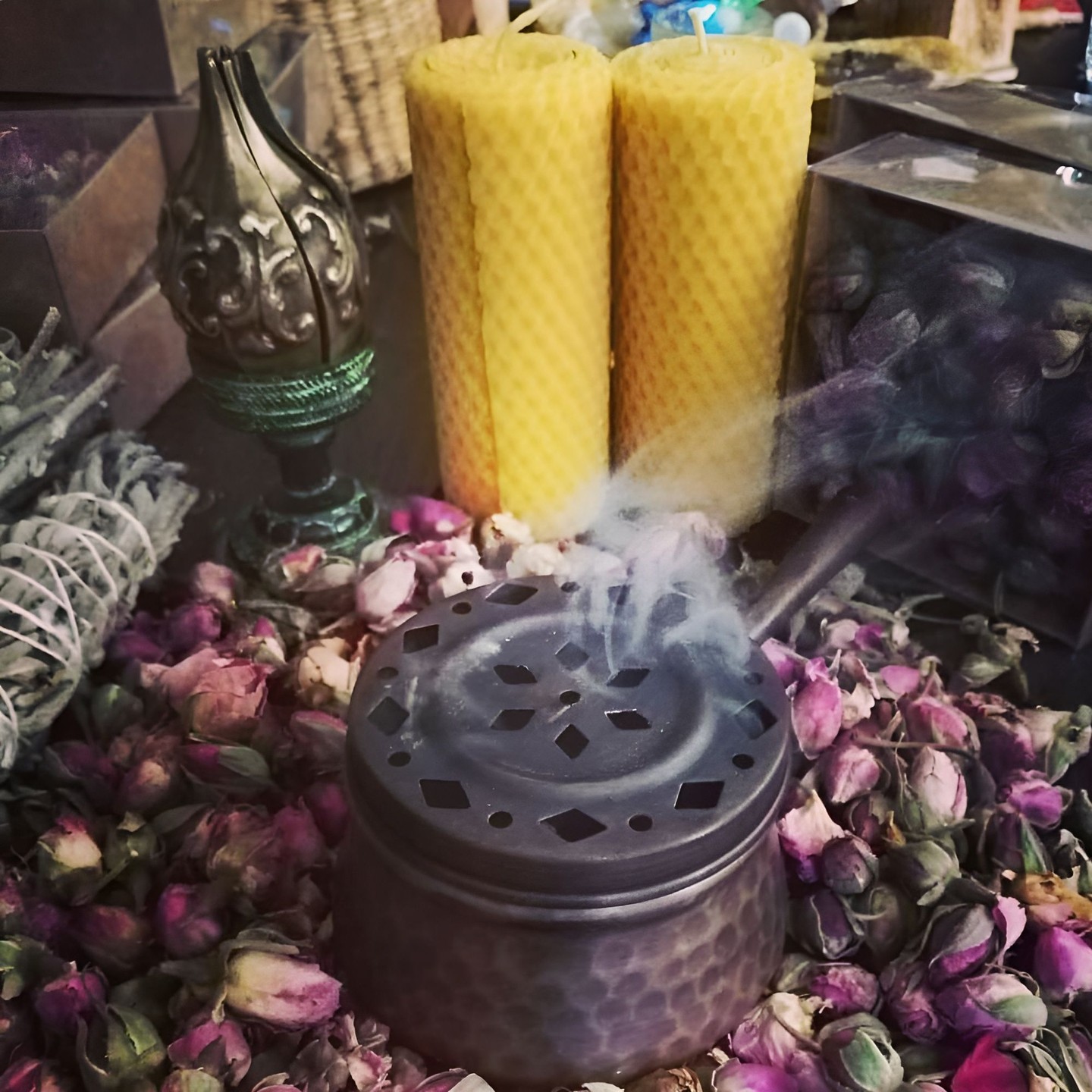
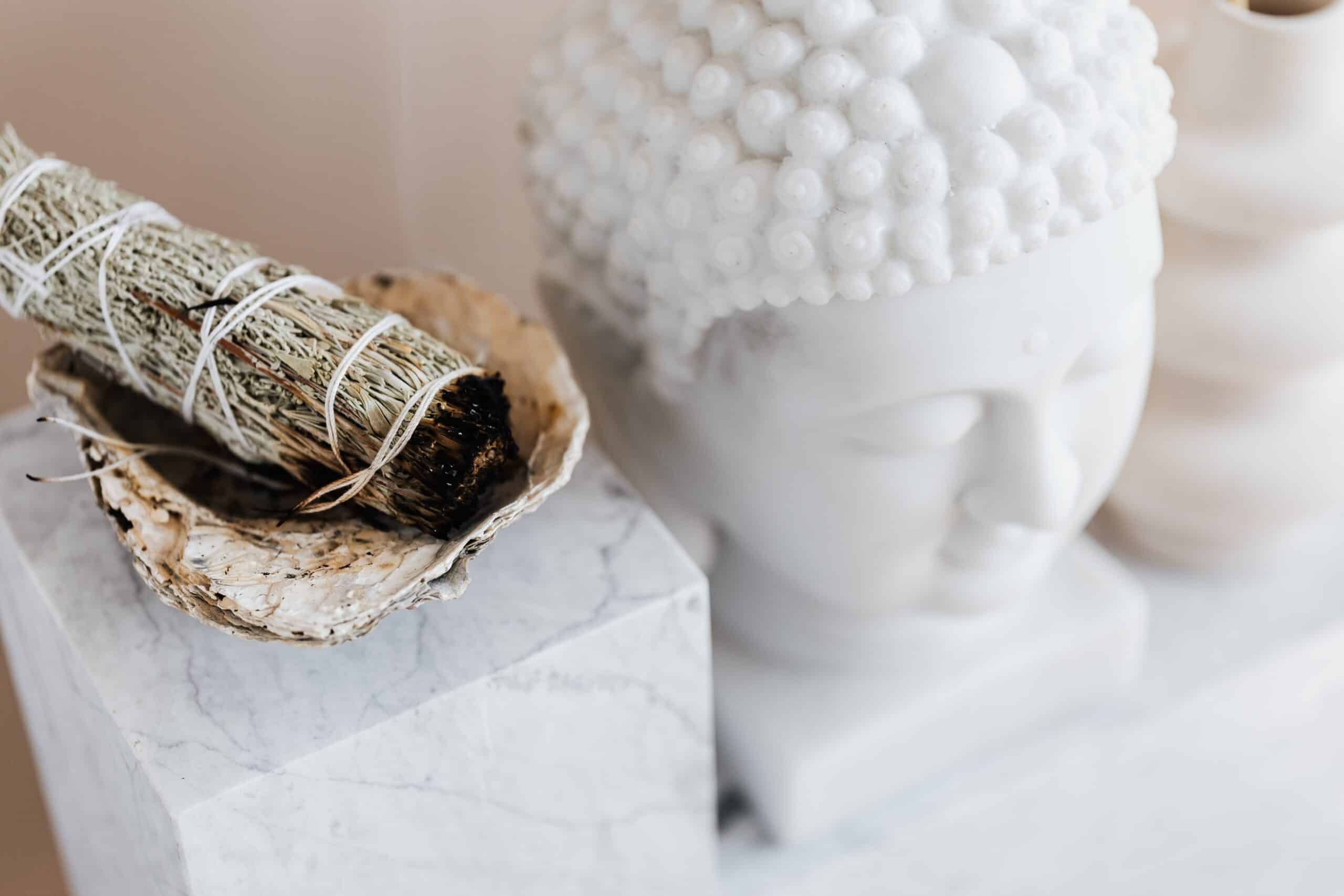
In Anatolia, sage is usually burned as dried leaves in a shell or metal dish, and the smoke is carried into every corner of the house. In some regions, other local herbs such as lavender and rosemary are burned alongside it. People commonly burn sage when moving into a new home, before new beginnings or at the end of a busy period, and many simply enjoy its green, herbal scent on an ordinary evening.
How to burn sage
Sage is burned in a fireproof container, and the smoke is guided with a feather or by hand. In smoke cleansing rituals, the smoke is carried slowly through a room to mark it as fresh and ready for something new.
Many traditions burn several herbs for different purposes. Sage and sagebrush are often used in smoke cleansing rituals, while sweetgrass is burned in Indigenous ceremonies of prayer and blessing.
In Nepal, shamans burn blends of plants, resins and flowers that vary from ritual to ritual. In Morocco’s Gnawa tradition, ceremonies pair particular scents, colors and music with each part of the ritual.
A simple sage ritual at home
Begin by opening a window and taking a quiet moment for yourself. Place a little dried Anatolian sage, or a sage bundle, in a shell or fireproof bowl and light it. Once it catches, blow out the flame and let it smolder. As the smoke rises, carry the bowl slowly through the room, or simply let the scent drift while you sit. Always burn sage in a well-ventilated space, keep it away from children and pets, and never leave it unattended. If you have asthma or another respiratory condition, ask your doctor before burning herbs.
Burning local plants: if you gather and dry your own herbs, many foraging traditions teach you to take only what you need, to leave enough for the plant to regrow, and to thank the place you gathered from.
Sage in chakra lore
Sage also appears in modern chakra lore and in astrology. In these belief systems, the herb is associated with the body’s chakras and with particular planets and signs.
In chakra lore, sage is most often linked with the throat chakra (Vishuddha) and the third eye chakra (Ajna). The throat chakra is associated with communication and self-expression, and the third eye chakra with insight and intuition. Some people burn sage while they meditate on these themes. We share these associations as tradition, not as a promise of any effect.
Sage and astrology
In modern astrological lore, sage is often linked with the planet Mercury, which is associated with communication, intelligence and the mind. Older herbals disagree: Nicholas Culpeper’s 17th-century herbal assigned sage to Jupiter. Some modern writers also connect sage with Pluto and themes of transformation.
Many people burn sage during meditation, at the new and full moon, during astrological transits or during Mercury retrograde, as a way of marking the moment.
In this lore, each chakra is also linked with particular signs and planets. Sage is said to connect the throat chakra with Gemini and Virgo, and the third eye chakra with Sagittarius and Pisces.
To bring the scent of Anatolian sage into your home, explore our Traditional Herb Bundles collection. Our Anatolian Sage Bundle and Dried Anatolian Sage are made for your own rituals, meditation and quiet evenings at home.




