
Blog
How to Choose an Incense Holder: Materials, Types and Care

A simple guide to choosing an incense holder
The right incense holder keeps your incense steady, catches the ash and embers, and suits the space it lives in. In this guide, we look at the main materials, which holder suits which kind of incense, and how to look after it.
Materials
Incense holders are usually made from ceramic, metal, stone, wood or natural seashell. Each has its own look and its own strengths:
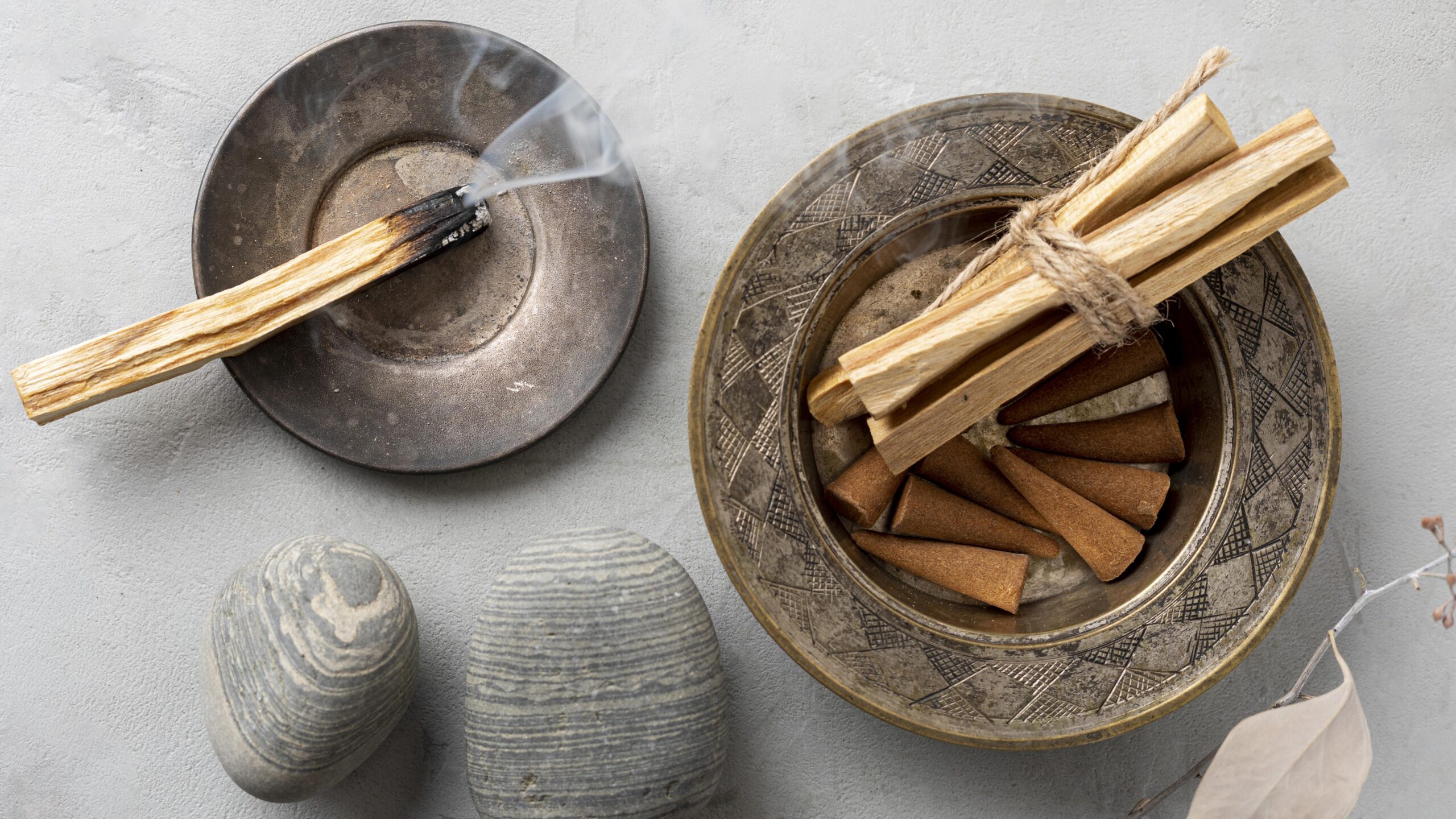
- Ceramic and stone are heat-resistant and heavy enough to stay put, which makes them a good choice for charcoal, cones and palo santo.
- Metal holders are durable and easy to wipe clean.
- Wood brings a warm, natural look. Use wooden holders for incense that rests in a groove, and keep embers away from the wood itself.
- Seashells have beautiful natural shapes and patterns. Choose a deep, stable shell and set it on a heat-resistant surface.
Match the holder to your incense
- Palo santo rests best in a holder with a groove or wide base that catches embers and ash.
- Loose botanical incense and resins burn on charcoal, so they need a heat-resistant bowl filled with a layer of sand.
- Cones sit on a flat, heat-resistant tray or in a burner made for them; backflow cones need a backflow burner.
- Sticks need a holder with a hole or groove that holds them steady and a base that catches the ash.
How to light incense
Light the tip, let it flame for a few seconds, then gently blow it out so it smolders. Rest it in the holder, on a heat-resistant surface, and stay in the room while it burns. Our guide to burning incense explains sticks, cones and charcoal step by step.
Cleaning and care
Let the holder cool completely, then tip out the ash. Ceramic, stone and metal holders can be wiped with a damp cloth; wooden and seashell holders are best cleaned gently with a dry or barely damp cloth. Replace the sand in charcoal bowls from time to time.
Choosing a holder for your space
Think about where it will live. A smooth ceramic or metal holder suits a modern, minimal room; wood, stone and seashell suit a warmer, more natural style. Many people keep one holder for everyday use and another for special evenings.
Explore our holders
Browse our incense holders and burners in ceramic, stone, wood, metal and seashell. For palo santo, our Handcrafted Palo Santo Holder holds the stick upright in its center socket while the wide dish catches embers and ash.
Frequently Asked Questions
What is the best material for an incense holder?
It depends on what you burn. Ceramic, stone and metal are heat-resistant and suit charcoal, cones and palo santo; wood and seashell bring a natural look for incense that rests in a groove.
Can I use a seashell as an incense holder?
Yes. Choose a deep, stable shell that catches the ash, and set it on a heat-resistant surface.
How do I clean my incense holder?
Let it cool completely, tip out the ash, then wipe it. Use a damp cloth on ceramic, stone and metal, and a dry or barely damp cloth on wood and shell.
How do I keep ash from making a mess?
Choose a holder with a wide base or a deep bowl that catches the ash, and set it on a tray or heat-resistant surface.
Which holder do I need for loose incense or resin?
Loose botanical incense and resins burn on charcoal, so use a heat-resistant bowl filled with a layer of sand, and handle the charcoal with tongs.
Burn incense in a well-ventilated room on a heat-resistant surface. Never leave burning incense unattended, and keep it away from children and pets. If you have asthma or another breathing condition, ask your doctor before burning incense.




