

Blog
How to Use Palo Santo: Light, Rest and Relight

Last updated: 2026-09-24 · Mamuxa atelier, Anatolia
To use palo santo, light the tip of a stick, let it flame for about 30 seconds, then gently blow it out so it smolders. Rest it on a heat-proof holder and let it go out on its own. When you want it again, relight the same stick. One stick lasts for many short sessions.
What palo santo is
Palo santo, Spanish for “holy wood,” is the wood of Bursera graveolens, a tree native to South America. It is burned in small sticks rather than as a loose incense. The scent is bright and fresh: lemon peel and pine resin, with a soft, woody warmth underneath.
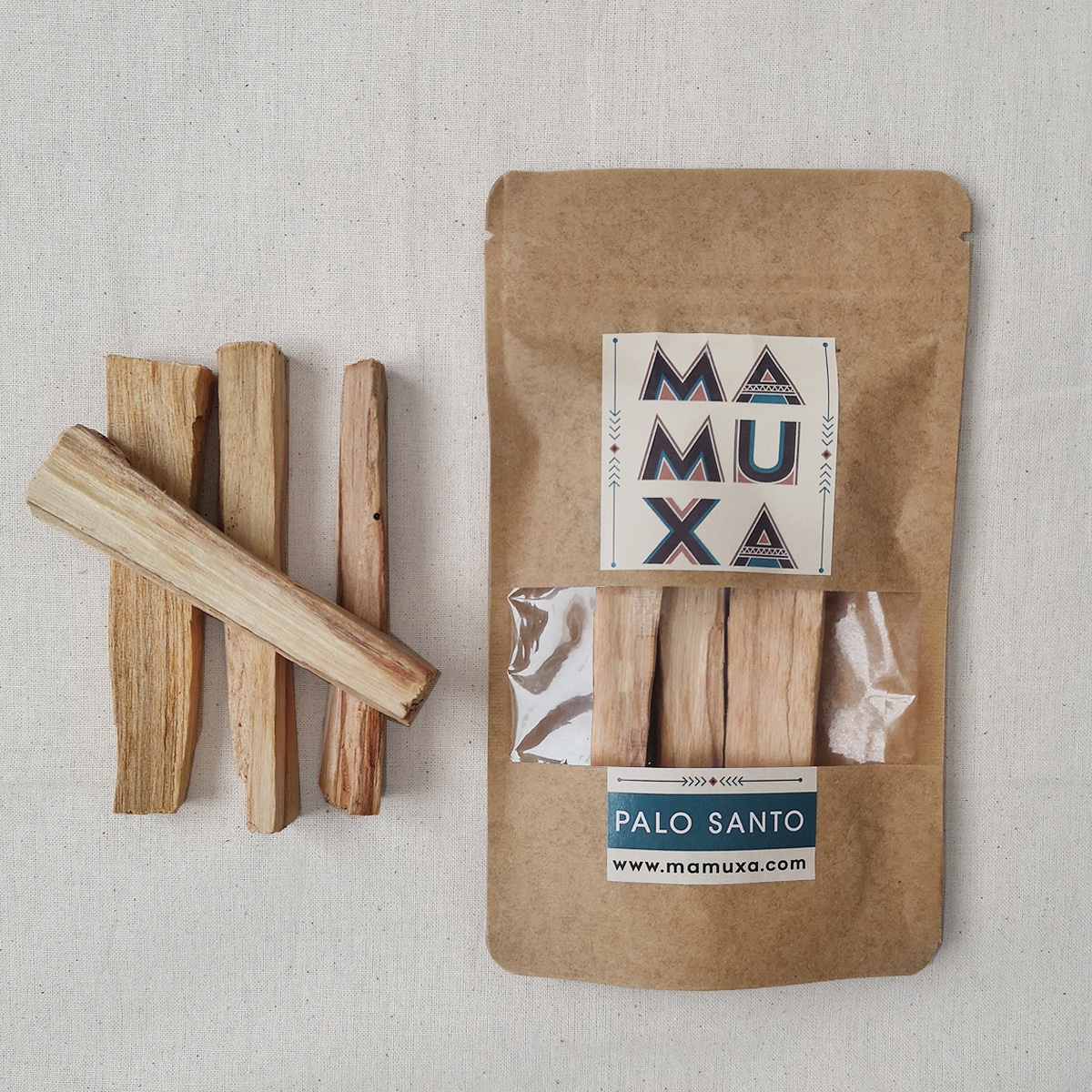
Our Palo Santo Wood Incense is hand-cut, so every stick varies a little in color, weight and width. Each is roughly 4 to 4.3 inches (10 to 11 cm) long. We pack by weight, in 30 g, 40 g, 50 g and 100 g sizes, so the number of sticks in a pack can differ slightly while the total weight stays the same.
A word on sourcing. Palo santo is not grown in Anatolia; it comes from South America, and we hand-pack it in our atelier. How palo santo is harvested matters to many people, and it matters to us. Whoever you buy from, it is fair to ask where the wood comes from. We share what we know, and if you have a question about ours, write to us.
How to light palo santo
- Hold the stick at an angle. Hold one end and point the other end down slightly toward a match, lighter or candle flame.
- Let it catch. Keep the flame on the tip until the wood lights. Palo santo is dense and resinous, so this can take a little longer than you expect.
- Let it burn for about 30 seconds. This gives the tip time to build a steady ember.
- Blow out the flame gently. You want a glowing tip and a thin trail of smoke, not an open flame.
- Let it smolder. Let the smoke drift through the room. Some people move the stick slowly through the space; others simply let it rest.
Rest it on a holder
Palo santo usually goes out on its own after a short while. Rest the stick on a heat-proof holder while it smolders, so any ember or ash lands safely.
Our ceramic Handcrafted Palo Santo Holder has a carved groove that holds the stick at an angle and a wide base to catch falling ash and embers. Any heat-proof dish works too, as long as it is stable and nothing flammable is nearby. You can see other styles in our incense holders collection.
To end a session early, press the glowing tip gently into the holder, a fireproof dish or a little sand.
Relight it
When you want palo santo again, simply relight the charred end of the same stick and repeat: flame for about 30 seconds, blow it out, let it smolder.
How long does a stick last
Our product page puts it simply: palo santo burns slowly and can be relit several times, so one stick lasts for many short sessions. We do not give a number of uses, because hand-cut sticks vary.
| Stage | What to do | What to expect |
|---|---|---|
| Light | Hold the tip in a flame for about 30 seconds | The wood catches and builds an ember |
| Smolder | Blow out the flame gently | A thin trail of lemon-pine smoke |
| Rest | Set the stick on a heat-proof holder | It usually goes out on its own |
| Relight | Light the charred end again | The same stick is used again, many times |
| Store | Keep in a dry place, away from sunlight | Ready for the next session |
How to store palo santo
- Keep sticks in a dry place, away from direct sunlight and heat.
- A closed box, paper bag or the pouch they came in works well, and it keeps the scent from fading into the rest of the cupboard.
- Store used sticks only once they are completely cool.
Palo santo, sage and lavender: traditions side by side
Palo santo has been burned since the time of the Incas. In Andean tradition, its smoke is used in smoke cleansing rituals and ceremonies, and today it is still lit to mark a fresh start, a meditation or a yoga practice.
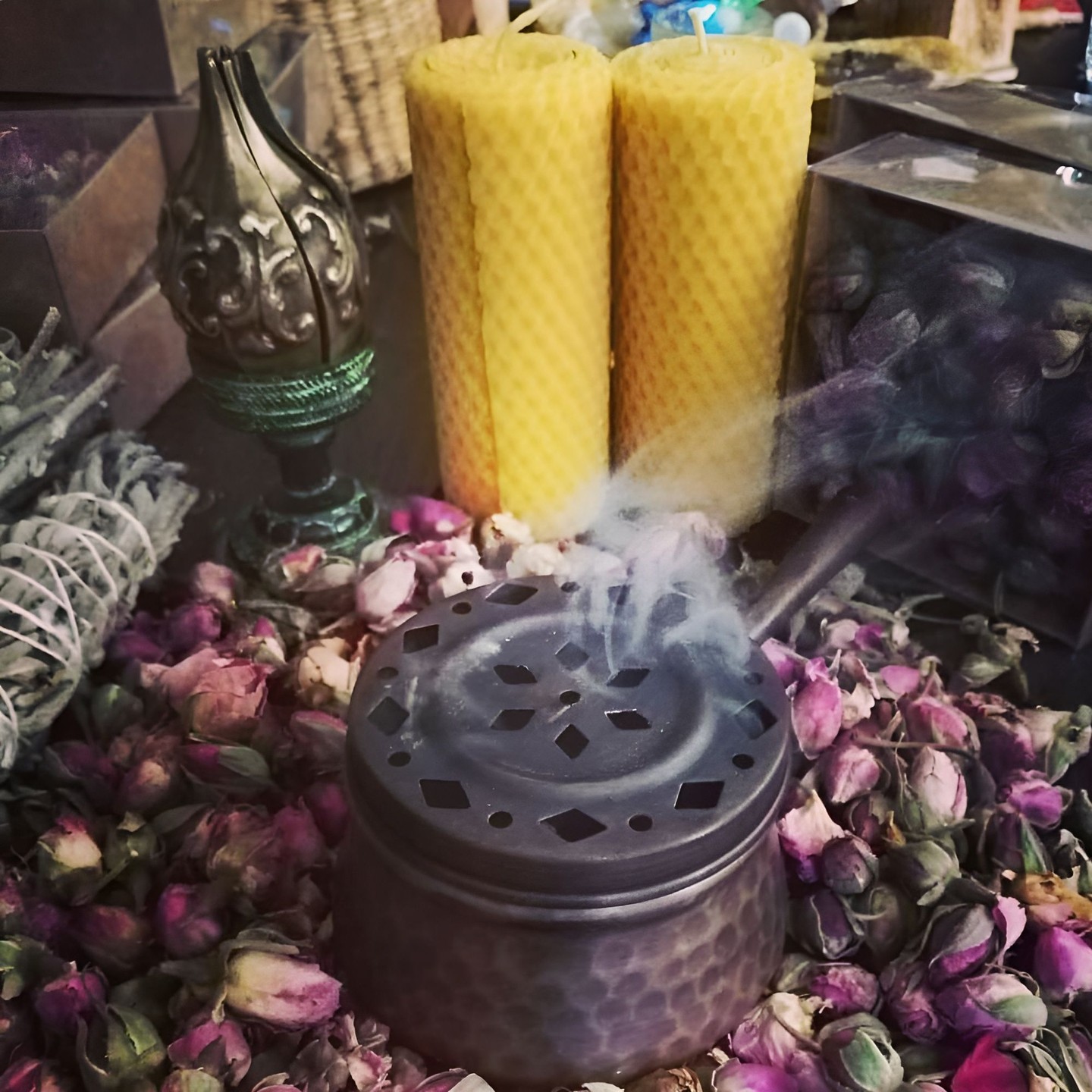
Herb bundles belong to their own traditions. Sage is traditionally used in smoke cleansing rituals in many cultures, and in Anatolian homes herbs are burned when moving into a new home, after a long week or before guests arrive. Our Anatolian sage bundles and lavender bundles are lit in the same way as palo santo: light the leafy tip, blow out the flame, let it smolder over a fireproof bowl or shell.
Some people burn palo santo and a herb bundle on different evenings; others light one after the other. The scents sit well together: bright citrus wood, green sage, soft floral lavender. We share these traditions as culture, not as promises. Many people simply light them to mark a quiet moment.
Safety
- Burn in a well-ventilated room, on a heat-proof surface.
- Never leave burning palo santo unattended, even though it usually goes out on its own.
- Keep it away from children, pets and anything that can catch fire.
- Make sure the ember is fully out before you leave the room or put the stick away.
- If you are sensitive to smoke, use sparingly.
- If you have asthma or another respiratory condition, ask your doctor before burning incense.
What you’ll need
- Palo Santo Wood Incense, hand-cut sticks
- A heat-proof holder, such as our Handcrafted Palo Santo Holder, or a fireproof dish
- Matches, a lighter or a candle
- A little sand to put the ember out (optional)
- An open window
- To explore other woods: our wood incense collection
FAQ
Why does my palo santo keep going out?
That is normal. Palo santo is meant to smolder briefly and then go out. If it goes out right away, let it flame a little longer, about 30 seconds, before you blow it out.
How many times can I relight a stick?
Many times. Our sticks burn slowly and can be relit several times. The exact number depends on the stick’s thickness and how long each session runs.
Why do the sticks in my pack look different sizes?
They are hand-cut, so color, weight and width vary. We pack by weight, so the total stays the same even when the stick count differs slightly.
Where does palo santo come from?
Palo santo (Bursera graveolens) is a South American tree. It does not grow in Anatolia; we hand-pack it in our atelier. Ask any seller where their wood comes from. We share what we know.
Can I burn palo santo with sage or lavender?
Yes. Many people alternate them or burn one after the other. Use a heat-proof holder or bowl for each, and ventilate the room.




