

Blog
Apatite: Colors, History and Crystal Lore

Apatite is a striking mineral known for its vivid colors, from sea blue and teal to spring green. It has a long place in mineralogy and a newer one in crystal lore. In this article we look at where apatite’s name comes from, what it looks like, how to look after it, and the traditions and astrological associations that have grown up around it. Along the way we separate what geology can tell us from what belongs to folklore, so you can enjoy both for what they are.
The History of Apatite: A Stone Named for Confusion
Apatite takes its name from the Greek word apatao, meaning “to deceive.” The name is a small joke from mineralogy: apatite crystals were easily mistaken for other minerals, such as beryl, tourmaline or peridot, before chemists and mineralogists learned to tell them apart. Once you know the story, the name is easy to remember.
- Scientific Discovery: Apatite was named in the late 18th century, in the early years of modern mineralogy, and it soon became a standard reference mineral. Apatite is not a single mineral but a group of closely related phosphate minerals. Its wide color range and variable chemistry helped mineralogists study how the same basic crystal structure forms under different conditions, in igneous rocks, in metamorphic rocks and in sedimentary layers. Today apatite is also an important source of phosphate for agriculture, which makes it one of the more useful minerals most people have never heard of.
- A Reference for Hardness: On the Mohs scale of mineral hardness, apatite is the reference mineral for 5. That puts it between fluorite (4) and orthoclase feldspar (6). A steel knife blade will scratch it, and quartz will scratch it easily. For you, this means apatite is a stone to handle with a little care.
- Use as an Ornamental Stone: Clear, well-colored apatite is cut as a gemstone for collectors, and rough or tumbled pieces are popular as decorative stones. Because it is fairly soft, it is less common in rings and bracelets that take daily knocks, and more often seen in pendants, earrings and display pieces. In folklore and modern crystal lore, apatite has come to be linked with creativity and clear thinking.
Apatite’s story shows a stone valued both by scientists and by people who simply enjoy its color. Its place in mineralogy is well documented; its place in crystal lore is more recent and more personal.
Astrological Connections: A Stone for Three Signs
In astrological tradition, apatite is linked with several zodiac signs. This section looks at those associations, which are shared among people who enjoy astrology and crystals, not as predictions or promises.
- Zodiac Associations: In astrology lore, apatite is traditionally associated with Gemini, Libra and Sagittarius. These signs are described as curious, social and free-spirited, and many people who follow crystal lore feel apatite suits their character. For Gemini, it is linked with communication; for Libra, with balance and harmony in relationships; and for Sagittarius, with a love of freedom and adventure.
- Astrological Symbolism: Apatite is traditionally associated with freedom, independence and creative expression. In crystal lore, it is described as a stone for people who want to find their own voice. As a symbol, it is often chosen by those who are marking a new creative chapter or a change of direction.
These associations say more about how people use symbols than about the stone itself. Many people enjoy choosing a stone that matches their sign, the same way they might choose a color or a flower that feels like theirs.
The Care and Maintenance of Apatite: Best Practices
Apatite is a soft, somewhat brittle stone, so it rewards gentle handling. Here are simple ways to keep its color and polish, followed by the traditional practices that crystal lore adds.
- Gentle Cleaning: Clean apatite with lukewarm water and a soft cloth. Avoid harsh chemicals, abrasive cleaners, ultrasonic cleaners and sudden temperature changes, which can dull or crack the surface. Rub the stone gently, rinse it in clean water and pat it dry. In many crystal traditions, this simple wash is also seen as a way of “resetting” a stone before use.
- Storage: Store apatite on its own, in a soft pouch or a lined box. Harder stones, such as quartz, will scratch it if they are kept loose in the same bag.
- Traditional Practices: In crystal lore, apatite is traditionally left under moonlight overnight or briefly placed in soil, practices said to refresh the stone. Moonlight does no harm to the stone. If you place it in soil, choose fine, dry soil, avoid grit that could scratch it, and rinse and dry it afterward. These practices are shared as tradition, part of how many people make a stone their own.
With this kind of care, apatite keeps its color and luster for a long time and can stay a lovely part of your home and your rituals.
The tips above are simple, and that is the point. A soft cloth, lukewarm water and a separate pouch are enough to keep an apatite stone looking its best. Any traditional practice you add is up to you.
Properties of Apatite: Color and Symbolism
Apatite stands out for both its appearance and its place in crystal lore. In this section we look at what you will see when you hold one, and at the symbolism that has grown up around it.
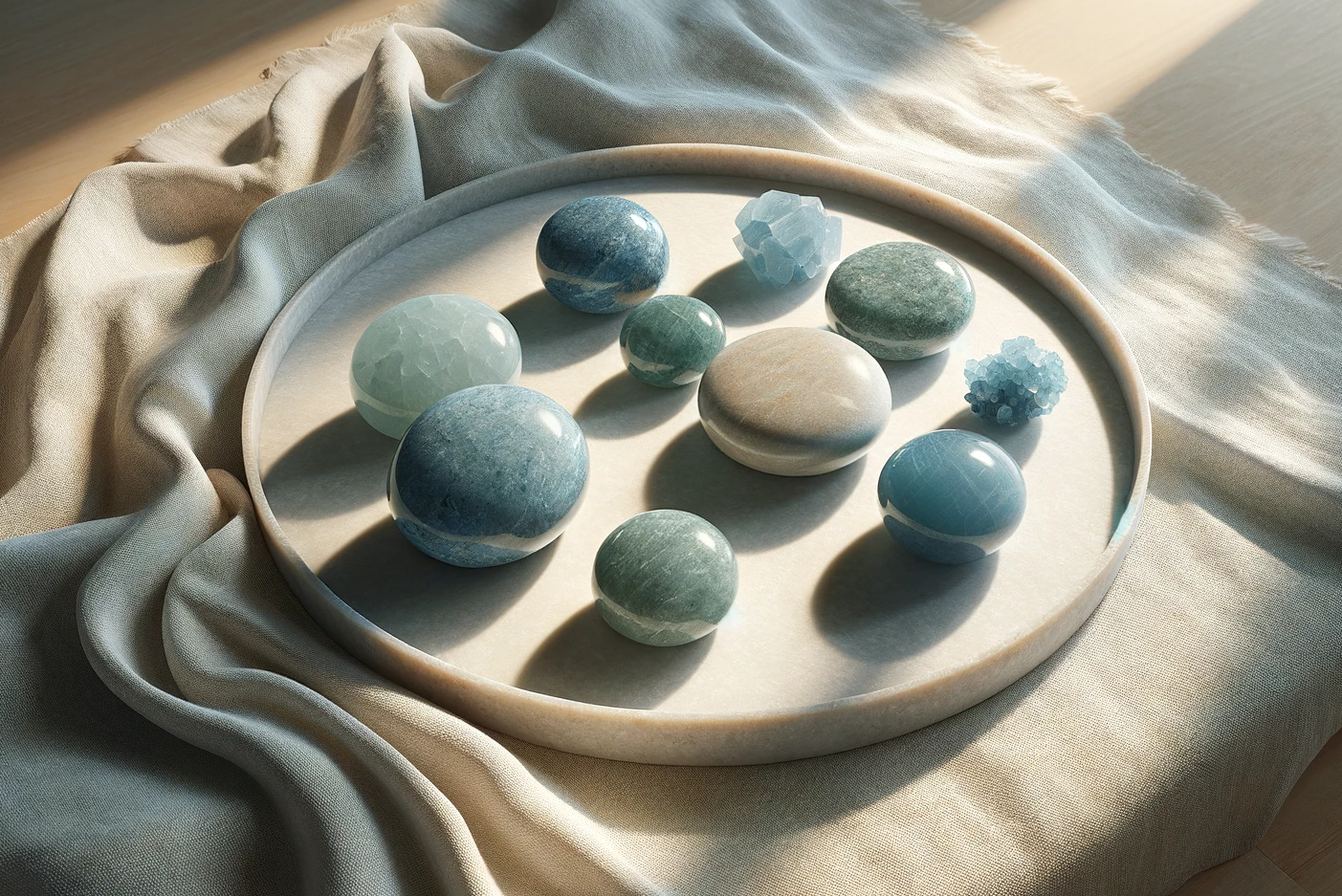
- Physical Appearance: Apatite comes in many colors, and the ones most people know are blue, teal and green; it can also be yellow, violet, gray or colorless. Pieces range from opaque to transparent. The blue and green tones recall the sea and new leaves, while the grayer pieces look quiet and understated. Because color and clarity vary so much, no two pieces look quite alike. Our Apatite Natural Stone comes in shades of blue, teal and green, and each piece is slightly different in size and weight.
- Lore and Symbolism: In crystal lore, apatite is associated with self-expression, communication and creativity. Many people who work with crystals choose it as a companion when they want to speak more openly or start something new. In folklore, it is also connected with confidence and personal growth. For people who follow these traditions, that makes apatite more than an ornamental stone; for others, it is simply a beautiful piece of blue-green mineral.
Either way, apatite rewards a closer look. Its colors are its most obvious appeal, and the lore gives many people a reason to keep one close.
Apatite in Meditation and Rituals
Apatite is often chosen for meditation and personal rituals. This section describes how people use it in these practices, as they are understood in crystal lore.
- Use During Meditation: Many people like to hold a piece of apatite during meditation as part of a quiet, focused ritual. In crystal lore, it is associated with clear thinking, and some people use its color as a point to rest their eyes on while they settle into a session.
- Ritual Practices: Apatite is traditionally used in rituals centered on creativity and expression. In these traditions, the stone is a symbol of original ideas, and people choose it when setting intentions around writing, making art or developing a skill. A stone on the desk can be a small, daily reminder of an intention you have set.
In these practices, apatite works as a symbol: something to hold, look at and return to. That is how most rituals work, and it is a large part of their appeal.
Apatite and Chakras: Chakra Lore
Chakras come from Indian spiritual traditions and describe points along the body linked with different themes. In modern crystal lore, stones are paired with chakras by color and symbolism. Here is how apatite fits into that lore.
- Throat Chakra: In chakra lore, blue apatite is most often associated with the throat chakra, which is linked with communication and self-expression. People who follow these traditions often choose apatite when they set intentions around expressing themselves more clearly and openly, at home or at work.
- Other Associations: Different sources also link apatite with the third eye chakra, associated with intuition, and some with the sacral chakra, associated with creativity, or the solar plexus chakra, associated with self-confidence. People who work with chakras often place several stones together as part of a ritual.
Chakra associations vary from one source to another, and they are best read as a map of symbols rather than a set of fixed rules. Many people enjoy them as a way to choose and arrange stones with meaning.
Culture and Symbolism of Apatite
Many crystals come with long stories attached, and it is worth being clear about which ones hold up.
- The Stories: You will find claims online that apatite featured in ancient Greek myths about the arts, in ancient Egyptian symbolism or in Native American ceremony. We could not find reliable historical sources for these stories, so we do not repeat them here. What is well documented is the Greek root of its name and its role in the history of mineralogy.
- Modern Meaning: Today, apatite’s meaning comes mostly from modern crystal lore, where it is linked with inspiration, communication and clear thinking. It has become a popular gift for writers, students and anyone starting a creative project, and a colorful addition to a stone collection.
A stone does not need an ancient legend to be meaningful. Its color, its odd name and the intention you give it are enough for many people.
Traditional associations are shared as culture and folklore; this is not a substitute for medical care.
Bring Color and Tradition into Your Home with Apatite
Apatite adds color to a shelf, a desk or a meditation corner, and for many people it carries personal meaning too. You can see the colors and sizes of our Apatite Natural Stone on its product page.
Related Products and Other Crystals
In addition to apatite, our Crystal/Natural Stone collection includes other stones, each with its own colors, lore and traditions.
Each stone is a natural piece, so size, shape and color vary a little from one to the next.
Whether you are building a collection or choosing a gift, take your time and pick the one you like best.




