

Blog
Turquoise: History, Lore and Care of the Sky-Colored Stone

Turquoise Through History: A Stone Worn Across Civilizations
Turquoise, with its shades of sky blue and sea green, is one of the oldest stones people have worn and traded. In this article we follow turquoise from ancient times to today: its history, its physical character, the lore and traditions attached to it, how it appears in meditation and ritual, and how to care for it at home. Traditional associations are shared as culture and folklore; this is not a substitute for medical care.
The History of Turquoise: A Treasured Stone of Ancient Civilizations
Turquoise has been prized in many cultures as a symbol of strength, status and good fortune. From Ancient Egypt to the Americas, it has held a special place in art, ceremony and personal adornment.
- Historical Use: In Ancient Egypt, turquoise was mined in the Sinai Peninsula and set into jewelry, amulets and burial objects for pharaohs and high-ranking officials. In the American Southwest, Ancestral Puebloan, Navajo and Zuni artisans have worked turquoise for many centuries, and it remains central to their jewelry traditions today. In many societies, turquoise was also worn by leaders as a mark of rank and wisdom.
- Cultural Significance: Many cultures regarded turquoise as a sacred and fortunate stone. Its color, a blend of sky and sea, was read as a sign of harmony with nature. In the folklore of several regions, travelers and riders carried turquoise on long journeys as a charm for safe travel. Turquoise has also long stood for friendship and peace, which is why it has been a favorite gift and a classic stone in jewelry.
This long history lifts turquoise beyond its beauty and turns it into a symbol with deep meaning. Knowing how people have used and valued it over thousands of years adds a story to every piece.
Astrological Connections: Turquoise and the Zodiac
Reflecting the colors of the sky and sea, turquoise is traditionally associated with the signs Sagittarius and Pisces, and in some modern lists it is also given as a birthstone for December.
- Zodiac Associations: In crystal lore, turquoise is traditionally linked with Sagittarius and Pisces. For Sagittarius, it is associated with an adventurous spirit and a love of learning. For Pisces, it is associated with emotional depth and intuition.
- Astrological Lore: In astrological tradition, turquoise is associated with inner peace and steadiness. Many people who follow these traditions like to wear it as a personal reminder of calm, especially during busy or uncertain times.
These astrological associations give turquoise a place in traditions of personal reflection. Whether or not you follow astrology, the stories around the stone make it a meaningful piece for daily wear or for a quiet moment of meditation.
Caring for Turquoise: Tips for Long-Lasting Beauty
Turquoise is a relatively soft and porous stone, around 5 to 6 on the Mohs hardness scale, so it needs gentle care to keep its color and polish. Follow these simple steps to keep your turquoise looking its best for years.
Caring for Your Turquoise
- Gentle Cleaning: Wipe turquoise with a soft, slightly damp microfiber cloth, then dry it right away. Avoid soaking it or leaving it in water, as the stone is porous and can absorb water and change color. Avoid chemical cleaners, ultrasonic cleaners and abrasives, which can damage the surface. Put turquoise jewelry on after lotion, perfume and hair spray, not before, since oils and cosmetics can stain it over time.
- Storage: Keep turquoise in a dry, cool place away from direct sunlight, since long exposure to strong light and heat can fade its color. Avoid sudden temperature changes. Store each piece on its own in a jewelry box or soft pouch so that harder stones and metal do not scratch it.
With this care, turquoise keeps its color and luster, and a favorite piece can stay with you for many years.
The Character of Turquoise: A Sky-Colored Stone of Lore and Tradition
Turquoise stands out for its color and its markings as much as for its place in crystal lore. Here is a closer look at what it is and what traditions say about it.
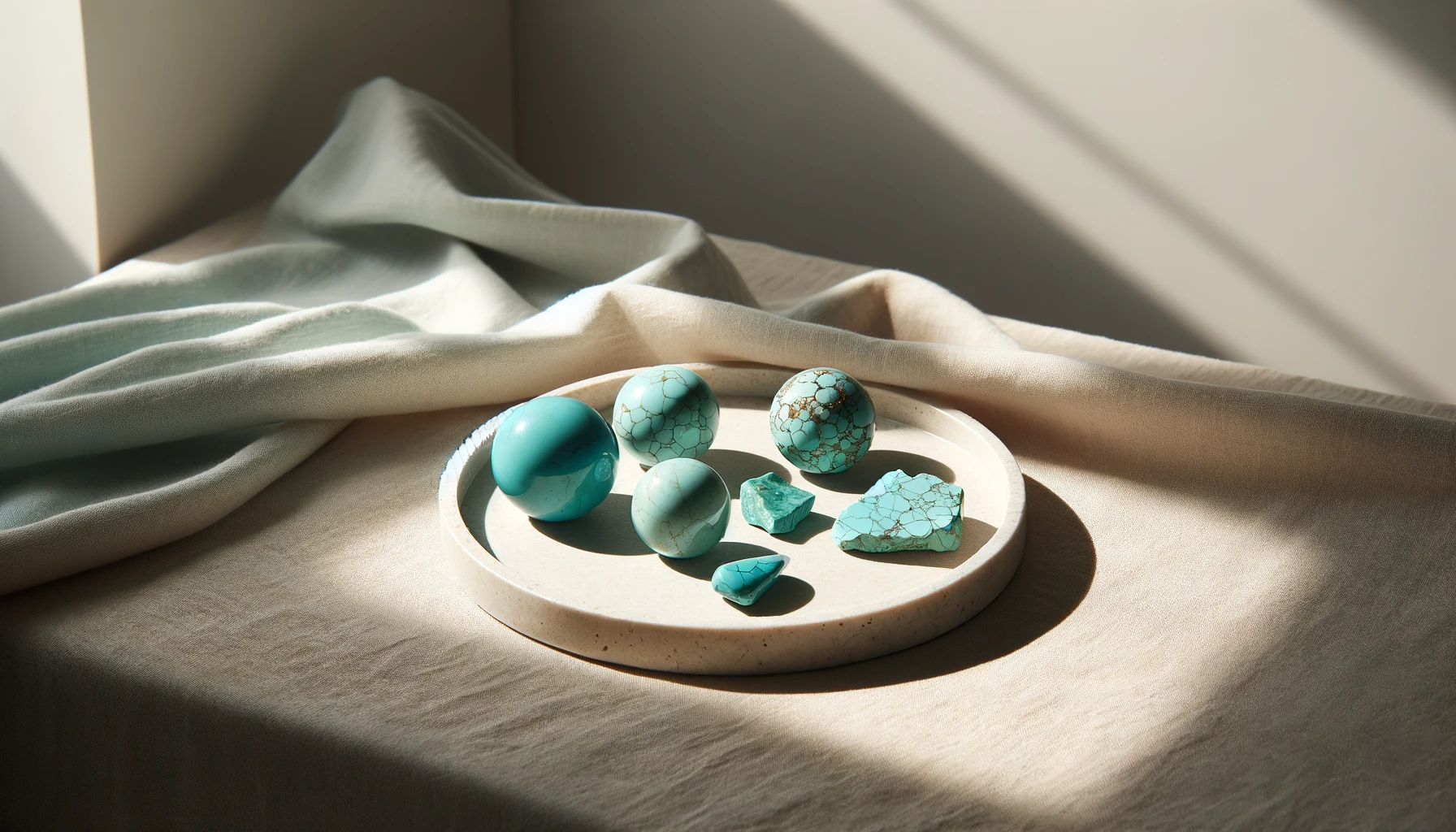
- Physical Appearance: Turquoise is a hydrated phosphate of copper and aluminum. Copper gives it its blue tones, and iron pulls it toward green. Many pieces carry a fine web of darker veins, called matrix, left by the surrounding rock. Because color and matrix vary from stone to stone, every piece of turquoise is one of a kind, which makes it a favorite for both jewelry and decorative objects.
- Traditional Associations: In crystal lore, turquoise is associated with balance, calm and emotional harmony, and many people treasure it as a stone of tranquility. In chakra tradition it is connected with the throat chakra, and so it is associated with communication, self-expression and creativity.
Its color and its rich lore have made turquoise a beloved stone in crystal traditions, worn every day, kept on a desk or held during meditation.
Turquoise in Meditation and Ritual
With its striking color and long history, turquoise is a favorite stone in meditation and ritual practice. Here is how it traditionally appears in both.
- During Meditation: Many people like to hold a piece of turquoise during meditation, and in crystal lore it is associated with clarity and inner peace. It is a popular companion for quiet sessions, and its traditional connection with the throat chakra makes it a favorite for practices focused on self-expression and creativity.
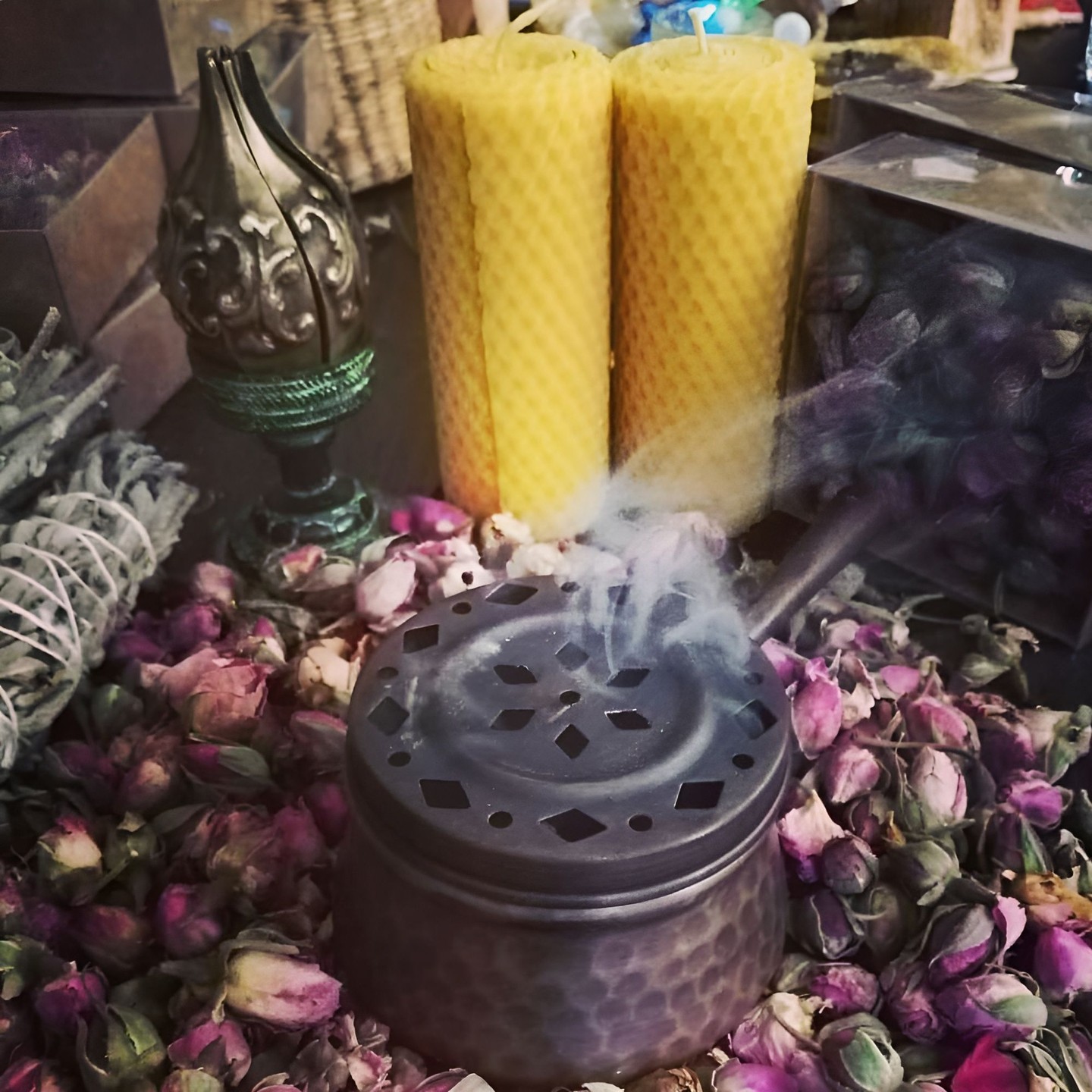
- In Ritual Practice: Turquoise often appears in intention-setting rituals. Some people place it on a small altar, beside a candle or an incense holder, as a symbol of the calm and harmony they want to bring into their day. In folk tradition it has long been a stone for travelers and for gifts marking a new chapter.
In meditation and ritual, turquoise becomes more than a decorative stone: it is a small, meaningful object that helps mark a quiet moment and an intention you set for yourself.
Turquoise and the Chakras: The Throat and Third Eye
In chakra tradition, turquoise is linked with two chakras in particular: the throat and the third eye.
- Throat Chakra: In chakra tradition, the throat chakra is linked to expression and communication, and turquoise is one of the stones most often associated with it. Many people choose it for practices centered on personal expression and creative work. In crystal lore, it is also associated with confidence and with open, honest communication in relationships.
- Third Eye Chakra: Turquoise is also associated with the third eye chakra, which chakra tradition relates to intuition, insight and clarity. People who work with turquoise in this context value it as a companion for reflection, journaling and quiet, focused meditation.
These associations give turquoise a meaningful place in chakra lore and make it a popular stone for meditation and personal reflection.
The Cultural and Mythological Legacy of Turquoise
Turquoise has a history as vivid as its color. Here is a closer look at how different societies and belief systems have valued it.
- Myths and Beliefs: Turquoise was considered a sacred stone in ancient Egyptian and Native American cultures. In ancient Egypt, it was used by pharaohs and nobles and placed in tombs, where it was believed to accompany the dead into the afterlife. In many Native American traditions, turquoise is a sacred stone that appears in ceremonies and is associated with the sky and with water. In these cultures, turquoise has often been seen as a bridge between the earthly and the spiritual.
- Cultural Significance: Across cultures, turquoise has taken on many meanings. Its very name comes from the old French pierre turquoise, “Turkish stone,” because it reached Europe through Anatolian and Ottoman trade routes, much of it from the historic mines of Nishapur in Persia. In Turkish and Persian culture it has long been used in charms against the evil eye, and blue stones and beads still hang in homes across Anatolia as a cultural symbol. In medieval Europe, turquoise became a popular stone for rings and was thought to bring good fortune to the wearer.
These cultural and mythological stories turn turquoise from a decorative gem into a stone with deep historical and symbolic value. For anyone interested in history, culture and folklore, turquoise is a rich subject to explore.
Bring the Beauty and Lore of Turquoise Into Your Life
With a history that runs from Egyptian tombs to Anatolian bazaars, turquoise is more than a pretty stone; it can become a meaningful part of your own traditions and your home. Whether as a piece of jewelry, a decorative object or a raw stone on your desk, turquoise brings its sky-blue color and its long story into your space. Traditional associations are shared as culture and folklore; this is not a substitute for medical care.




